London's roads tell a captivating story of its history and evolution, where a rich mix of architectural styles sit side by side. Few have influenced the city's design identity as much as John Nash, whose vision extended beyond individual buildings to the creation of complete urban landscapes. Defined by their stucco façades and balanced proportions, these developments were set around open spaces and carefully planned views to shape areas in an entirely new way. Now lining the most iconic streets in the capital, Nash’s legacy has stood the test of time, remaining physically intact and celebrated for shaping the modern West End.
A grand vision
Unlike many projects of the time, Nash focused on reshaping an existing built-up area rather than creating something entirely new on undeveloped land. His vision was to create a connected route between Regent’s Park in the north and St James’s Park, Carlton House and Buckingham Palace in the south. Regent Street linked the new Crown Estate with the older royal and political centre through a single route, with churches and garden squares leading the eye towards the royal landmarks beyond.
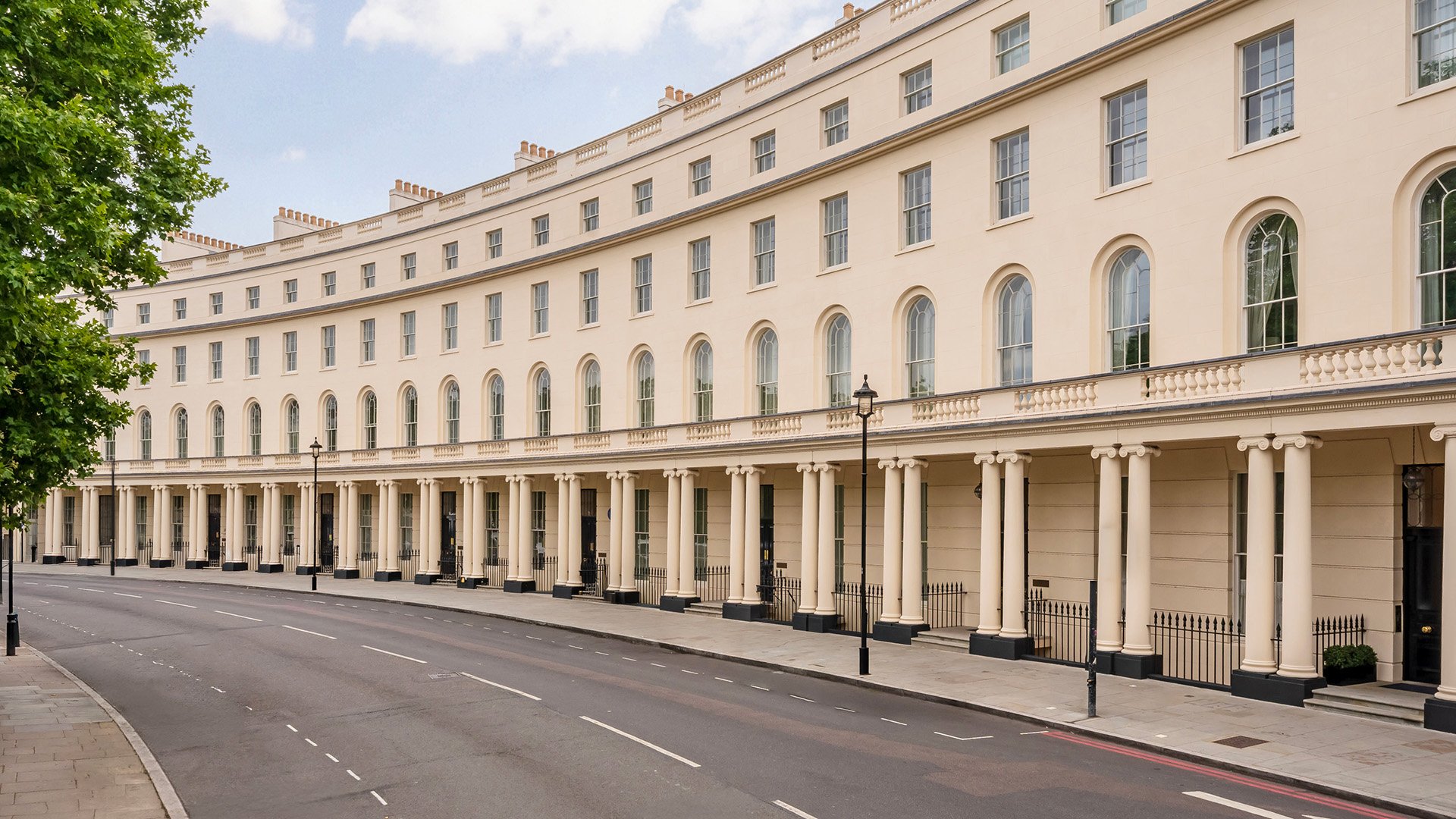
At the heart of this remarkable project were the grand terraces framing Regent’s Park. Spanning more than 400 acres, the picturesque landscape provides a peaceful setting for residents, offering a sense of status previously only afforded to aristocratic estates. Cumberland Terrace is a standout example, combining the scale and grandeur of Nash’s designs with an exceptional outlook over the lawns. Slightly further from the park itself, the smaller Italianate villas of Park Village gave middle-class families domestic privacy, with tree-lined avenues and a more neighbourhood charm. These residences perfectly demonstrate Nash’s efforts to create a rus in urbe, meaning ‘country in the city’, in the capital’s prime central district.
 |
 |
Regency charm
The architecture has a number of defining features which make it instantly recognisable. “These are classic examples of Regency style, with white stucco fronts and magnificent columns,” comments Matthew Huybrechts, Lettings Director at Dexters Mayfair. “Cornicing is used to give definition, while large sash windows and cast iron balcony railings add to their distinctive appearance.” Symmetry is also evident throughout, with terraces maintaining balanced proportions and presenting rows of townhouses as a single, unified façade. For buyers and tenants, Nash homes are desirable not only for their striking exteriors but also for the lifestyle benefits they offer. Matthew continues, “Thanks to their central location and access to a multitude of green spaces, they provide the perfect balance of urban living and leafy tranquillity. Many are set on elegant roads close to excellent local amenities and convenient transport connections, while Royal Parks and landscaped gardens are within easy reach.”
Heritage homes
These remarkable heritage homes come with a responsibility to preserve their historic charm for generations to come. “Buying a Nash property requires an understanding of the history you are inheriting,” says Hannah Thelwell, Sales Director at Dexters Westminster. “They need a careful approach, particularly in relation to original features and listed building legislation. Renovations need to be handled sensitively to help protect the character of the terrace, and regular external painting ensures it continues to look its best. For many prospective owners, this stewardship adds to the appeal. Buyers are not simply purchasing an outstanding home; they are joining one of London’s most important architectural legacies.”
John Nash’s Regency developments played a defining role in shaping the London we know today by transforming existing neighbourhoods into a connected urban landscape that linked Regent’s Park with the royal and political heart of the city. Characterised by elegant white stucco façades, balanced proportions, grand terraces and carefully planned views, Nash’s designs introduced a new way of combining architecture with green spaces. For Londoners living in these heritage homes, there is a responsibility to preserve the city's architectural legacies for future generations. Often blending classic designs with exceptional technology for modern convenience, these residences remain among the capital’s most sought after.